
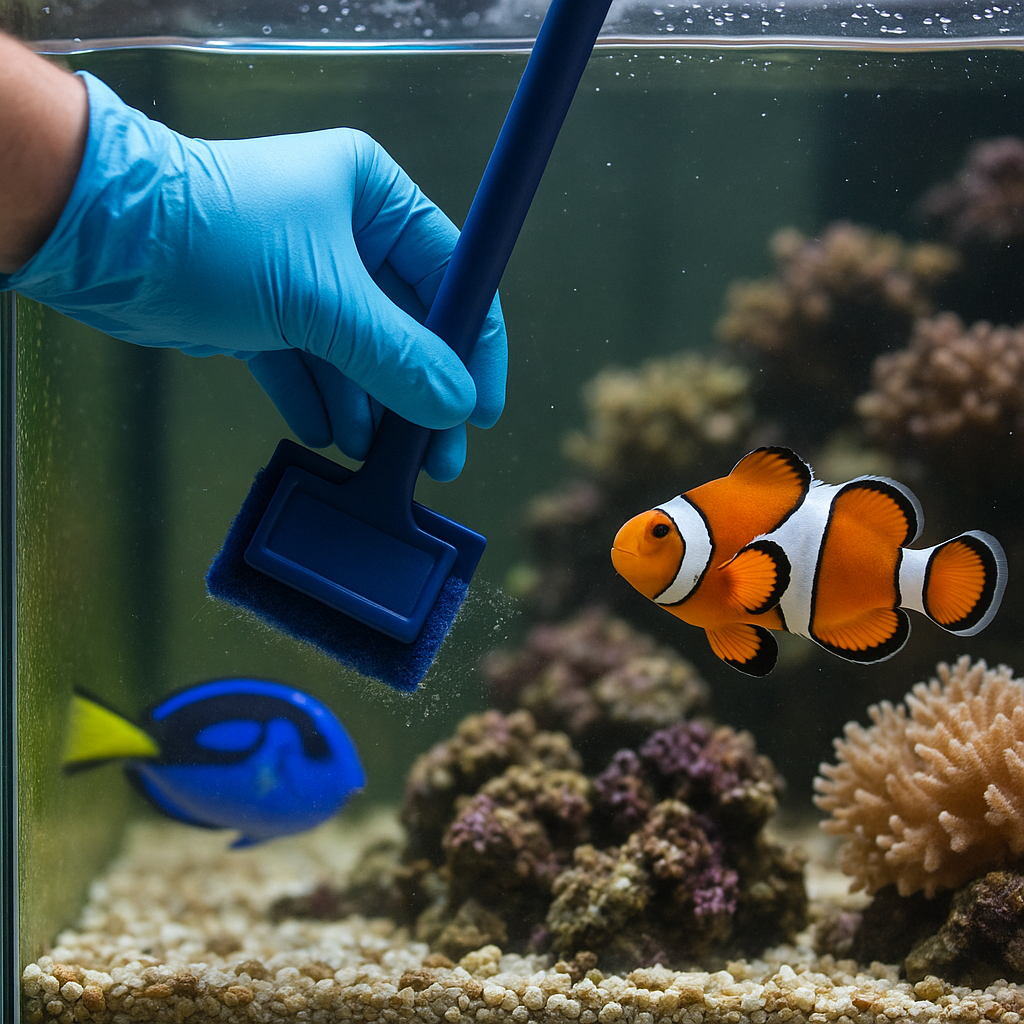
Maintaining a clean saltwater fish tank is essential for the health and longevity of your aquatic life. A well-maintained aquarium not only showcases the natural beauty of marine fish and corals but also helps prevent common issues such as algae overgrowth, poor water quality, and disease. In this blog post, we’ll share essential saltwater fish tank cleaning best practices to help you maintain a thriving marine environment.
1. Establish a Routine Cleaning Schedule
Consistency is key when it comes to maintaining a saltwater aquarium. Set a weekly and monthly cleaning schedule to stay on top of routine tasks. This includes wiping down the glass, vacuuming substrate, and checking your filtration system. Weekly water testing should be part of this routine to ensure that ammonia, nitrate, nitrite, pH, and salinity levels remain stable.
2. Perform Regular Water Changes
One of the most important saltwater aquarium cleaning tips is to perform regular partial water changes. Aim to replace 10–15% of the tank’s water weekly or 25–30% biweekly. This helps dilute toxins, remove waste, and replenish essential minerals. Always use RO/DI (reverse osmosis/deionized) water with the proper marine salt mix to maintain water quality.
3. Clean the Substrate Properly
Detritus and uneaten food can accumulate in the substrate, leading to nitrate spikes and cloudy water. Use a gravel vacuum or siphon to clean the substrate during water changes. Be gentle to avoid disturbing beneficial bacteria colonies. For deeper sand beds, avoid over-stirring, which could release harmful gas pockets.
4. Scrub Algae from Tank Walls
Algae growth is natural in any saltwater tank, but excessive buildup can block light and harm corals. Use a magnetic algae scraper or sponge to clean the inside of the glass. For stubborn coralline algae, a plastic or acrylic-safe scraper may be required. Avoid using household cleaners or soaps, which are toxic to marine life.
5. Maintain and Clean Filtration Equipment
Filters are the heart of your aquarium’s ecosystem. Rinse mechanical filter media, such as sponges or pads, in old tank water during water changes. Replace chemical media like activated carbon or phosphate removers monthly. Clean protein skimmers, powerheads, and pumps as needed to ensure optimal water flow and nutrient export.
6. Monitor Livestock and Remove Debris
Part of good saltwater tank cleaning practices includes observing fish and invertebrates for signs of stress or disease. Remove uneaten food, dead organisms, or shed exoskeletons promptly to prevent ammonia spikes. Using a turkey baster or aquarium tongs can make this task easier.
7. Don’t Overclean
While it may be tempting to over-sanitize, excessive cleaning can disrupt the beneficial bacteria colonies that support biological filtration. Avoid replacing all filter media at once or sterilizing live rock and substrate unless absolutely necessary.
Conclusion
Following these saltwater fish tank cleaning best practices will help ensure a balanced and healthy marine environment for your aquatic pets. By establishing a routine, performing regular maintenance, and monitoring your aquarium closely, you can enjoy a beautiful and thriving saltwater setup for years to come.